
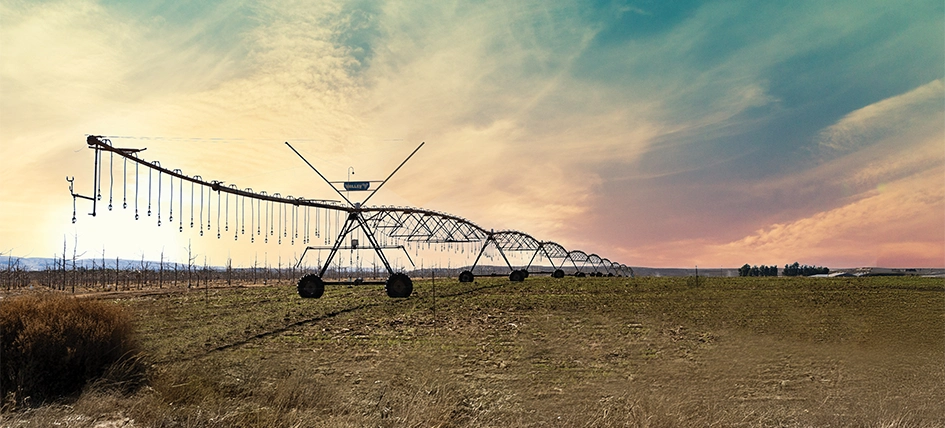
Water scarcity in South Africa runs deeper than rainfall. Discover how smarter farming, infrastructure and funding can turn constraint into resilience.
World Water Day is a useful reminder that, in South Africa, water isn’t only a seasonal headline or a household issue. It’s one of the basic inputs that keeps the country moving. It supports food security, underpins the economy, sustains jobs, and gives businesses the stability they need to operate and grow. When water is under pressure, the effects reach far beyond dry taps. They show up in farms, supply chains, livelihoods and long-term resilience.
That’s what makes the current water conversation more urgent than the usual awareness-day fare. Even when good rains bring a bit of relief, South Africa’s water risk does not disappear with the weather. The real problem is structural. It sits in ageing infrastructure, weak maintenance, poor demand management and a system that has far less slack than many people assume. In other words, the issue isn’t simply whether it rains. It’s whether the country is equipped to make the most of the water it has.
That matters in a naturally water-scarce country. South Africa receives around 500mm of rainfall a year, compared with a global average of about 860mm. Agriculture accounts for roughly 61% of national water use, but that should not be read as a warning label. It’s a sign of just how central farming is to everyday life and the wider economy. Food security walks hand in hand with the water, however, the real opportunity lies in making that water work harder, not pretending the sector can do without it.
Agriculture is often spoken about as if it’s simply the biggest user of water and therefore the problem. That’s lazy thinking. The more useful question is how water is managed on farms, and what can be done to improve efficiency without compromising production. This is where regenerative and conservation-minded practices start to matter. Better soil cover, less disturbance, healthier root systems and more diverse planting all help improve infiltration, reduce run-off and retain moisture more effectively. In a country like ours, better soil isn’t just a farming issue. It’s part of the water strategy.
That shift is already changing the way serious agricultural businesses think about resilience. Smarter irrigation, tighter monitoring, more efficient growing systems and healthier soils are no longer nice extras for a sustainability report. They are practical responses to a hard constraint. When water is limited, the farms that can produce more with less are the ones that are better positioned to hold their ground. That’s good for the farm, good for the food system and, frankly, good for everyone who prefers their groceries to remain an actual reality.
This is where access to the right funding has a meaningful role to play. When critical systems are under pressure, better outcomes rarely happen by accident. They need funding, discipline and long-term thinking. Fedgroup’s Private Capital offering is built around that reality, structuring finance around the operational demands of farming rather than forcing agricultural businesses into rigid, one-size-fits-all lending models. That gives farmers access to capital that is better aligned to how the sector actually works, which matters when resilience depends on better infrastructure, better systems and better decisions.
An example is Fedgroup’s funding of CAN-Agri’s hydroponic greenhouse in Pretoria. It’s the sort of project that makes this conversation real. The greenhouse is designed to maximise resource efficiency and reduce water use compared with more traditional growing methods. That’s a useful reminder that innovation in agriculture does not have to arrive dressed as a buzzword. Sometimes it simply means using tighter systems to reduce waste and improve output. South Africa could do with more of that and rather fewer grand declarations.
That’s the real story behind World Water Day. Especially in South Africa, water security is inseparable from food security, economic resilience and long-term growth. The point isn’t only to acknowledge the pressure, but to find a sustainable way to reduce it.
Alternative assets
Financial services
